
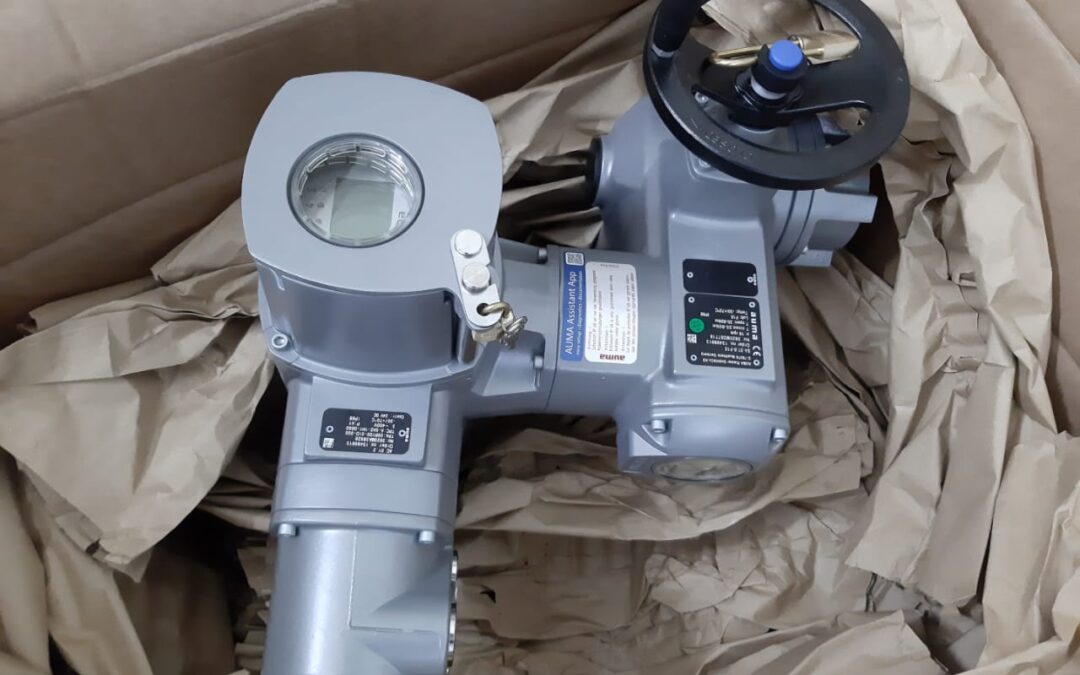
A Combined Cycle Power Plant bearing is not only a mechanical spare.
For U.S. import entry, it is a document-sensitive item. Many shipments are delayed not because the bearing is fake, but because the paperwork is incomplete, inconsistent, or poorly matched.
If one document says one thing and another document says something else, customs review can slow down. For urgent plant maintenance or shutdown work, even a short delay can create serious commercial loss.
Why a bearing shipment gets held
Customs hold risk usually starts from mismatch in the document chain. A CCPP bearing shipment normally depends on these papers:
- Commercial Invoice
- Packing List
- Bill of Lading / Air Waybill
- Purchase Order or Order Confirmation
- Certificate of Conformity (if supplied)
- Material Certificate / Test Certificate (if claimed)
- Country of Origin statement and marking
- Broker filing data (classification, value, importer details)
When these papers do not match line by line, customs or broker review becomes difficult.
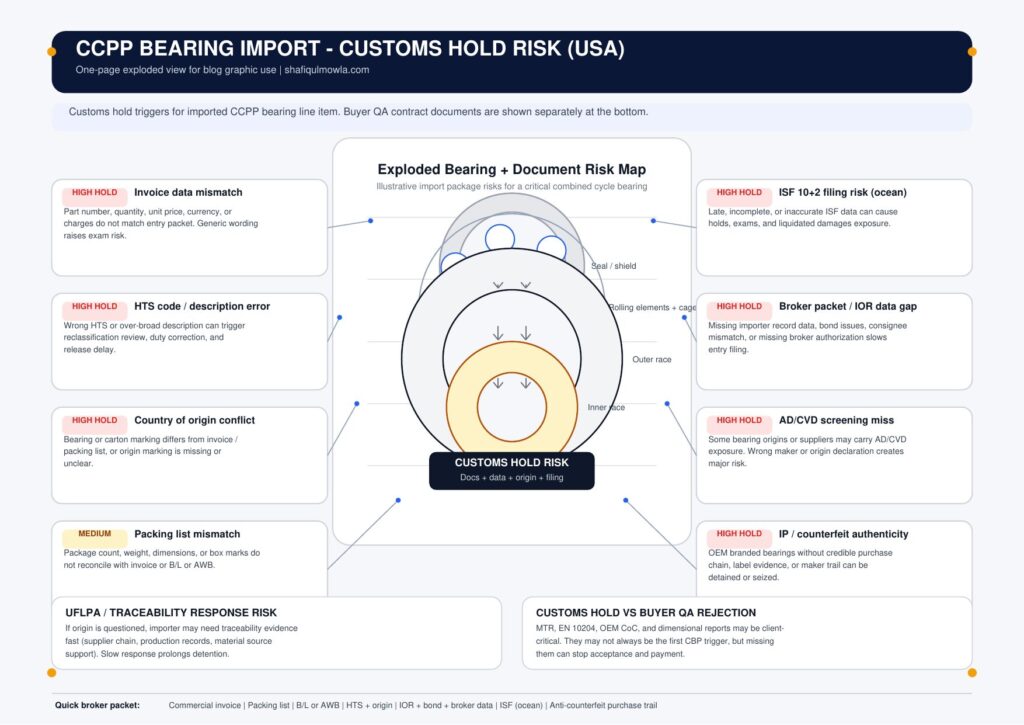
Main document risks for CCPP bearing imports
1) Generic product description
If the invoice says only “bearing spare” or “machine bearing,” this is weak. A CCPP bearing should have a proper commercial description.
Example problems:
- unclear use
- unclear type
- unclear specification
- wrong tariff classification risk
Better practice is to describe the item clearly with model, type, and industrial use.
2) Part number mismatch
This is one of the biggest risks. The part number on invoice, packing list, and certificate must match exactly.
Even one missing digit, wrong suffix, or revision mismatch can create:
- entry delay
- broker query
- internal compliance stop
- buyer rejection risk
3) Country of origin confusion
Many people confuse country of shipment with country of origin. They are not always the same.
If origin marking on box says one country but invoice says another, customs review risk increases.
Problems can happen when:
- origin statement is missing
- product marking is absent
- carton label and invoice origin do not match
4) Incorrect value declaration
If a high-value industrial bearing is declared at a suspiciously low value, it can attract attention.
Also risky:
- no unit price
- no total line value
- unclear freight separation
- wrong currency mention
- inconsistent invoice and purchase order values
This creates valuation questions and can slow release.
5) Certificate claims but no support
Sometimes seller writes “OEM,” “original,” or “certified” in quotation or invoice, but shipment file has no matching certificate.
This creates risk for importer and consultant because:
- declared quality cannot be proven quickly
- buyer approval may stop
- customs exam time becomes more dangerous due to weak file
6) Packing list mismatch
Packing list is often ignored, but it is very important.
Common mistakes:
- wrong quantity
- wrong net/gross weight
- missing crate numbers
- no dimensions
- packing list not matching invoice line sequence
If customs opens cargo and physical packaging does not match packing list, delay risk increases.
7) Wood pallet or crate compliance issue
Even if the bearing documents are correct, the shipment can still be held because of packing material.
Common risk points:
- untreated wood pallet
- missing treatment mark
- damaged or unclear mark
- mixed packing materials without clear identification
This is a hidden risk in industrial shipments.
8) Importer and consignee data mistakes
Wrong importer name, consignee address, or broker details can create filing problems.
Common errors:
- old company address used
- wrong contact person
- inconsistent consignee name spelling
- importer tax data mismatch in filing records
These are coordination mistakes, but they can still delay customs release.
What customs hold means in business reality
A customs hold does not always mean seizure. In many cases it means delay for review, inspection, clarification, or additional information. But for a power plant spare, delay itself is a major cost.
Possible business impact:
- outage schedule disruption
- emergency expediting cost
- storage or demurrage risk
- internal blame between vendor, buyer, broker, and forwarder
- loss of confidence in consultant or supplier
Simple prevention checklist before shipment
For each critical bearing shipment, verify these points before dispatch:
- Exact part number and revision matches all documents
- Clear item description on invoice and packing list
- Quantity and unit match everywhere
- Country of origin is correctly stated and marked
- Invoice value and currency are accurate
- Certificate list matches what seller promised
- Packing list weight and dimensions are correct
- Crate / pallet compliance is checked
- Importer, consignee, and broker details are correct
- Final pre-shipment document review is completed line by line
Final note
For CCPP bearing imports, customs clearance depends heavily on document quality. The bearing may be genuine and urgent, but weak paperwork can still stop movement.
Good import control starts before shipping, not after the cargo reaches the port.