
Table of Contents
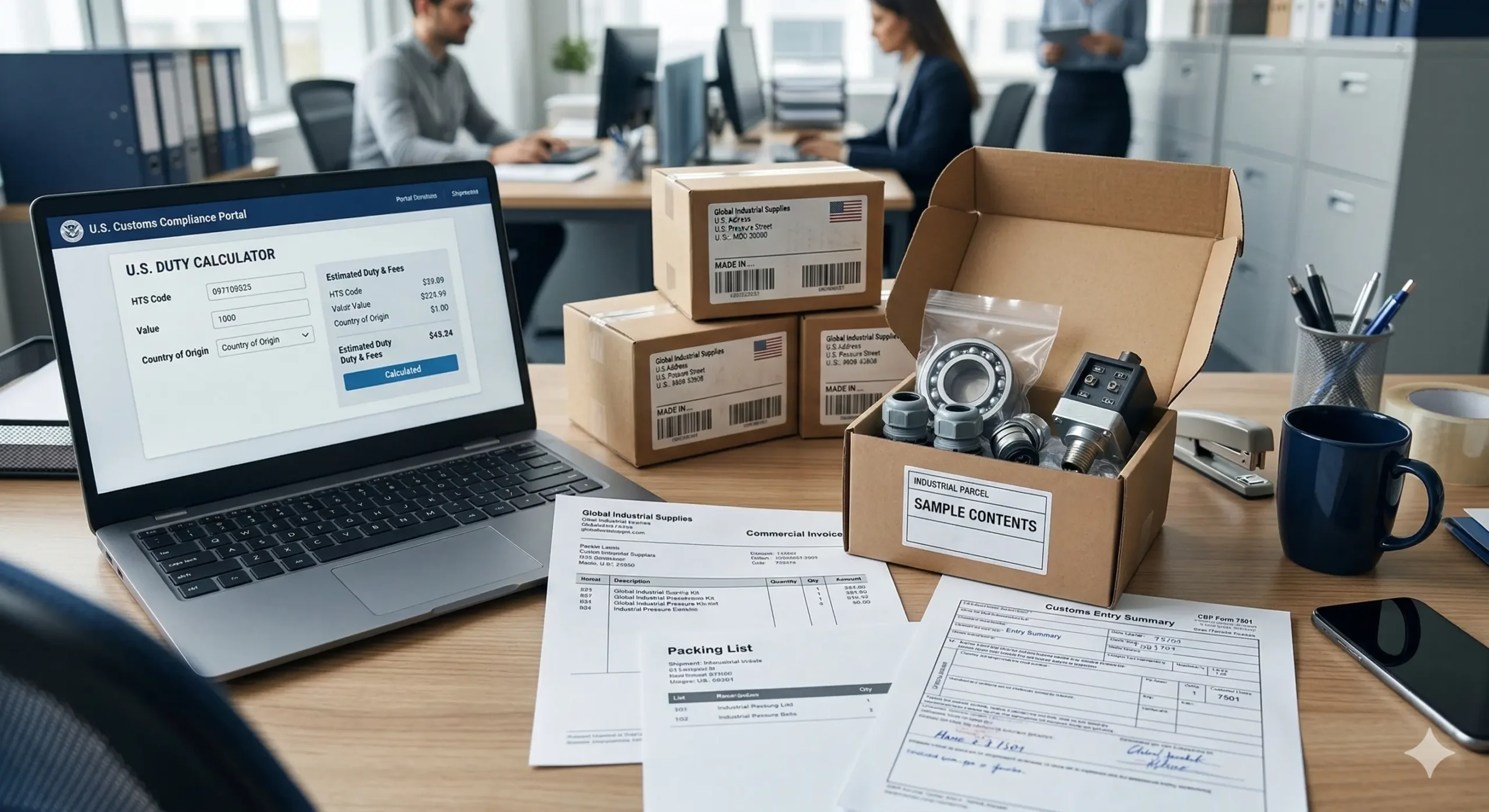
After the De Minimis Suspension 2026, the de minimis privilege that once let many low-value imports clear without duty has been suspended on a global basis. If you buy industrial spares for U.S. power plants, substations, EPC jobs, or MRO work, the old habit of treating an urgent sub-$800 parcel as a low-risk shipment is now outdated. That means many small shipments now need the same discipline you would normally reserve for larger orders: correct classification, clean country-of-origin language, proper entry handling, and a broker-ready document file before the goods leave the supplier.
For industrial buyers, this is not just an e-commerce story. After the De Minimis Suspension 2026, A last-minute actuator repair kit, a pressure switch, a set of bearings, a gland packing set, a signal isolator, or a specialty connector can still be low in invoice value but high in operational risk. When one small package is misclassified, poorly described, or shipped with weak origin support, the result can be landed-cost surprise, customs delay, site schedule pressure, and internal blame between procurement, logistics, engineering, and finance.
1. De Minimis Suspension 2026 – What changed in 2025 and 2026
The first two countries that the suspension applied to were China and Hong Kong. The White House first suspended duty-free de minimis treatment for all countries on July 30, 2025, with implementation effective August 29, 2025. On February 20, 2026, that de minimis suspension 2026 was continued and revised. The updated order says the de minimis exemption under 19 U.S.C. 1321(a)(2)(C) does not apply to covered shipments regardless of value, country of origin, mode of transportation, or method of entry, except for limited statutory exclusions.
CBP’s e-commerce FAQ reflects the operational point in plain language: low-value shipments that previously qualified for duty-free de minimis treatment are no longer eligible and are now subject to admissibility requirements and applicable duties. In practical buyer language, the small parcel did not disappear. The free pass disappeared.
This matters because many industrial teams still think customs intensity belongs only to heavy freight or big capital equipment. In 2026, especially after the de minimis suspension 2026, that mindset causes avoidable mistakes. A rushed parcel can now trigger the same questions that larger shipments face: what is the exact product, who is the importer of record, what is the tariff classification, what is the country of origin, what is the actual value, and do the documents match the marking.
2. Why this hits industrial buyers harder than they expect
Industrial procurement teams often use small cross-border parcels to solve urgent equipment gaps. That is common for consumables, controls, repair parts, and specialist accessories. The invoice may be small, but after the de minimis suspension 2026, the real exposure is not. Many of these items are mission-critical, time-sensitive, and sourced from specialized suppliers in Europe, India, China, Turkey, Japan, or the Gulf. After the de minimis suspension 2026, with duty-free treatment is gone, the buyer must think about full landed cost again, not only the supplier’s price.
The second problem is description quality. A vague invoice line such as “spare part,” “electrical item,” or “repair kit” is too weak for industrial imports. Instead of reducing scrutiny, vague descriptions often create more questions from customs authorities and brokers. Buyers should use clear descriptions that explain the product function, model number, material, and sometimes the end-use environment.
After the de minimis suspension 2026, accurate product descriptions have become even more important. Since many low-value shipments now require full customs entries, poorly described items can lead to classification issues, additional document requests, or shipment delays. Clear and consistent descriptions help brokers process entries faster and reduce the risk of customs holds.
The third problem is document culture. Many suppliers are still comfortable sending the invoice after dispatch, or sending incomplete origin wording, or using different wording on the invoice, packing list, and label. After the de minimis suspension 2026, that behavior is even riskier because the shipment is more likely to be handled as a fully dutiable, entry-sensitive import file.
3. De Minimis Suspension 2026 – What the buyer should do before purchase order, not after shipment
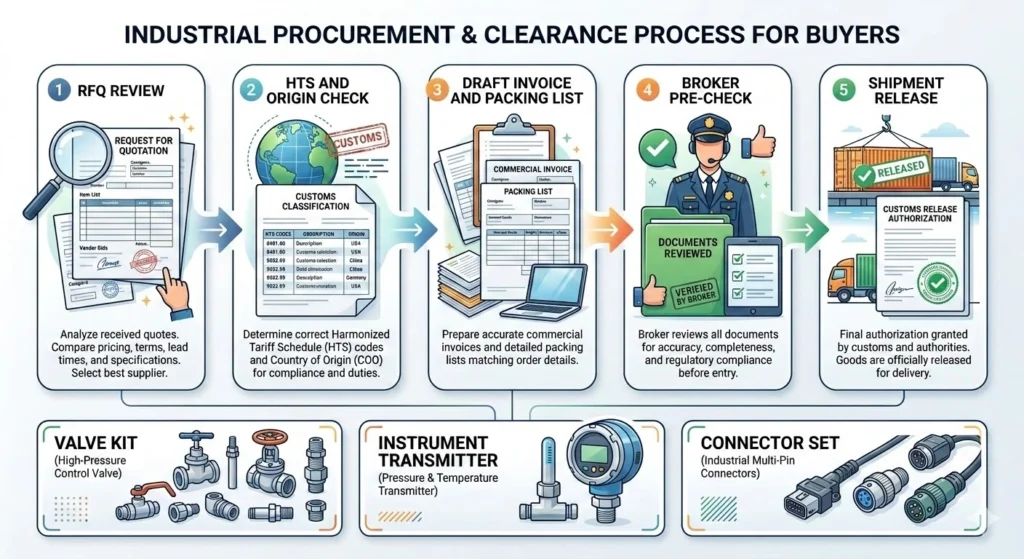
Classify before award
After the De Minimis Suspension 2026, it is time that you start taking HTS more seriously. Harmonized Tariff Schedule (HTS) is a 10-digit United States classification system used for calculating customs duties on imported goods. Harmonized System (HS) Codes are six-digit identifiers that have been developed by the World Customs Organization (WCO) for the purposes of facilitating international trade.
Do not wait until the broker asks for an HTS code after the goods are already packed or shipped. Instead, build tariff classification into the sourcing stage of your procurement process. When buyers identify the correct HTS code early, they can estimate duties, check compliance requirements, and avoid last-minute confusion during customs entry. For frequently purchased industrial items, due to De Minimis Suspension 2026, it is helpful to maintain an internal classification sheet that lists the item name, HTS classification logic, country of origin, supplier details, and any previous customs notes or broker feedback.
De Minimis Suspension 2026 – Fix origin language and marking early
Country-of-origin wording must be consistent across all shipment documents, including the commercial invoice, packing list, labels, and product markings where applicable. Any mismatch between these documents can raise questions during customs review and may delay clearance. After the De Minimis Suspension 2026, if a product has a multi-country supply chain—for example, components manufactured in one country and assembled in another—it is important to obtain a clear supplier origin statement early in the procurement process.
Success in multi-country supply chains requires building resilience, enhancing end-to-end visibility via technology (AI/IoT), and diversifying supplier bases to mitigate risk.
Name the importer of record and shipping path
Who is the importer of record? Who will pay the duties, taxes, and fees? Will the shipment move by courier, freight forwarder, or postal channel? These are critical questions that should be clearly decided before the shipment leaves the supplier. Waiting until the airway bill is issued often leads to confusion, rushed decisions, and delays during customs clearance. This preparation has become even more important after the de minimis suspension 2026, as many low-value shipments that once moved easily through simplified channels now require proper customs entries, duty payment, and clear responsibility for compliance.
4. The real cost impact is more than duty
When buyers hear that the de minimis suspension 2026 privileges are gone, they often focus only on the duty percentage that may now apply to small shipments. However, that duty is only the visible part of the cost impact. The broader effect can include customs brokerage fees, time spent correcting documents, supplier rework, additional internal approvals, storage or handling charges, delays to maintenance schedules, expediting costs, and even overtime for site teams waiting for critical components. In many cases, these operational costs can exceed the duty itself, making preparation and accurate documentation far more important for smooth imports.
For a plant or grid project, one delayed small component can also hold up testing, startup sequencing, repair windows, or contractor productivity. So the better question is not ‘Will this sub-$800 package now have duty?’ It is ‘What is the full schedule and compliance cost if this urgent parcel is not entry-ready?’
5. A practical Proof Pack for small industrial imports after De Minimis Suspension 2026
To be inline after the de minimis suspension 2026, use one simple shipment file, even for low-value parcels. At minimum, it should contain:
- Commercial invoice with a specific product description, correct value, Incoterm, and country of origin
- Packing list that matches the invoice wording and quantity
- Supplier origin statement where origin could be questioned
- HTS classification note or broker pre-check record
- Importer-of-record and delivery-party confirmation
- Product identifier support such as model number, catalog sheet, serial photo, or nameplate image where relevant
This is not excessive paperwork. It is the minimum structure that stops most avoidable surprises. After the De Minimis Suspension 2026, For higher-risk items, add material traceability, calibration evidence, test certificates, or manufacturer authorization depending on the item category and project requirement.

6. De Minimis Suspension 2026 – Five common mistakes U.S. buyers still make
- Mistake 1: treating a small shipment as a low-risk shipment. Fix: use the same pre-shipment review discipline for an urgent parcel that you would use for a larger project item.
- Mistake 2: shipping on vague descriptions. Fix: use item-specific language that a broker and customs reviewer can understand.
- Mistake 3: letting the supplier send documents after dispatch. Fix: require draft invoice and packing list approval before the goods move.
- Mistake 4: ignoring origin consistency. Fix: make sure the product, packaging, and paperwork tell the same origin story.
- Mistake 5: separating procurement from compliance. Fix: give one person ownership of the shipment file from PO through dispatch.
7. De Minimis Suspension 2026 – What to ask your supplier today
- What exact country of origin will appear on the invoice, packing list, and label?
- What product description do you want used for customs, and can you send it before shipment?
- Do you have a sample invoice and packing list draft now, not after dispatch?
- Does the item have a model number, serial number, or catalog reference we can use in the file?
- Can you confirm the Incoterm and who is paying duties, taxes, and fees?
- Can you provide the HS/HTS classification you normally use for this product in international shipments?
- Will the invoice description match the packing list and product label exactly?
- Can you confirm the true commercial value that will appear on the invoice for customs purposes?
- Are there any export control or compliance documents required from your side before shipment?
- Can you send product specifications, datasheets, or catalog pages that help support the customs description?
- Is the item manufactured in one country or assembled from multi-country components?
- Will the shipment include any certificates such as certificate of origin, test certificate, or manufacturer declaration?
- Can you confirm the packaging details, weight, and dimensions that will appear on the packing list?
- Who will be responsible for courier booking or freight forwarder coordination for this shipment?
- Can you share the expected dispatch date and tracking method before the goods leave your facility?
8. FAQ
A: Yes. Covered low-value imports that previously relied on duty-free de minimis treatment are now generally subject to applicable duties, fees, and admissibility requirements.
A: No. Industrial buyers, EPC teams, MRO teams, and cross-border spare-parts buyers also feel the impact of de minimis suspension 2026 when they move low-value goods into the United States.
A: Yes, but smooth clearance now depends more on preparation. Clear description, correct origin, correct value, clean documents, and a broker-ready file matter more than before.
A: Absolutely. Once the duty-free shortcut is gone, classification affects duty treatment, admissibility review, and internal landed-cost planning.
A: Create one standard pre-shipment checklist for all small imported spares. Require draft documents before dispatch, assign ownership, and keep a repeat-use Proof Pack for common item categories.
9. Conclusion
The big lesson is simple. In 2026, a low invoice value does not mean low customs exposure. For U.S. industrial buyers, the real risk is not just duty. After the de minimis suspension 2026, it is preventable friction created by weak descriptions, weak origin control, weak document timing, and weak ownership.
If your team buys imported spares for power plants, grid assets, industrial maintenance, or EPC work, the best move is to standardize a small-shipment compliance routine now. Build the file early. Verify before dispatch. Ship only when the paperwork tells one clear story. And if you follow these steps strictly, the De Minimis Suspension 2026 will not have any negative impact on your business.