
Alcad NiCd Batteries for US Power Plants: Why Engineers Still Trust Pocket‑Plate NiCd
What really happens inside compliance teams – and how to keep your shipment away from the rejection pile.
1. Why DC battery banks are non‑negotiable in US power plants
Every combined cycle power plant and substation in the US hides one quiet hero: the DC battery bank.
When the grid fails or a black‑start is needed, those batteries keep switchgear, control systems, relays, and emergency lighting alive long enough to shut down safely or restart the plant.
For this job, most utilities are not looking for the “latest hype battery”. They want technology that:
- Survives 20+ years of real‑world abuse.
- Works in hot, dusty battery rooms and harsh outdoor enclosures.
- Delivers reliable power after long float charging and rare deep discharges.
This is exactly where Alcad NiCd batteries still hold a strong position against lead‑acid and many newer chemistries.
2. What makes an Alcad NiCd battery different?
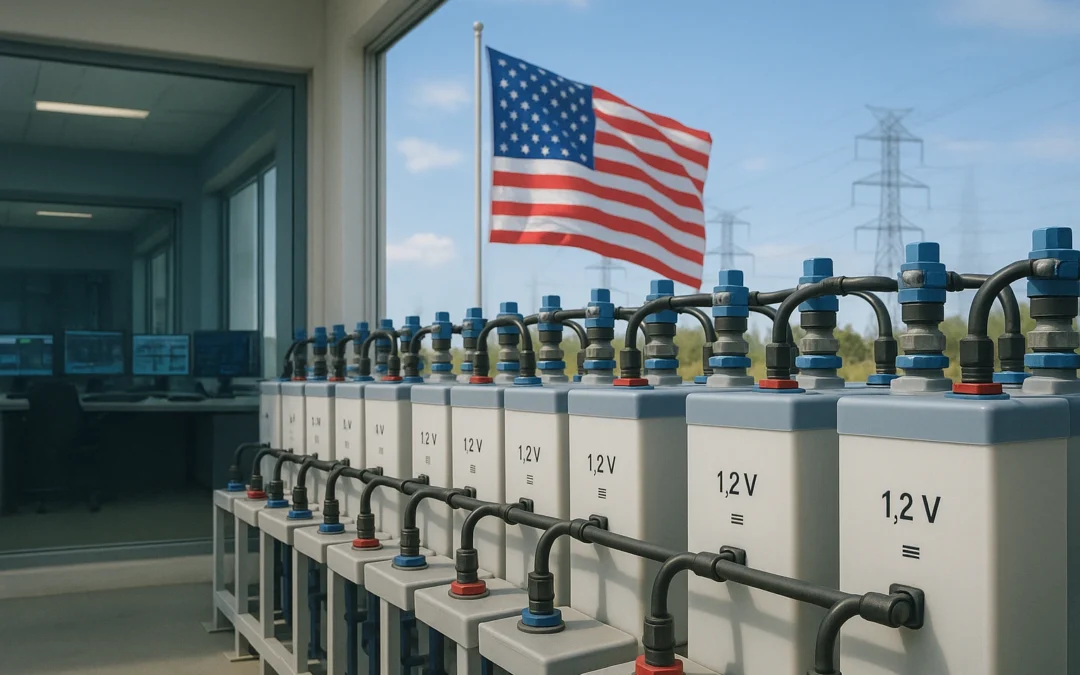
An Alcad nickel cadmium industrial battery is a flooded, pocket‑plate NiCd cell, normally 1.2 V per cell, built for stationary backup.
Instead of fragile plates, it uses welded steel pockets filled with active material and an alkaline electrolyte.
The result is a cell that tolerates abuse, deep discharge, and high temperatures much better than most lead‑acid designs.
For US plants, that means:
- Very long service life – often 20 years or more with proper maintenance.
- Wide temperature range – stable performance from cold outdoor yards to hot battery rooms.
- Low maintenance – top‑up water only a few times per year on a well‑designed system.
That is why you still see Alcad batteries for power plants, substations, and oil & gas facilities worldwide.wer.
3. Typical Alcad ranges used in utility applications
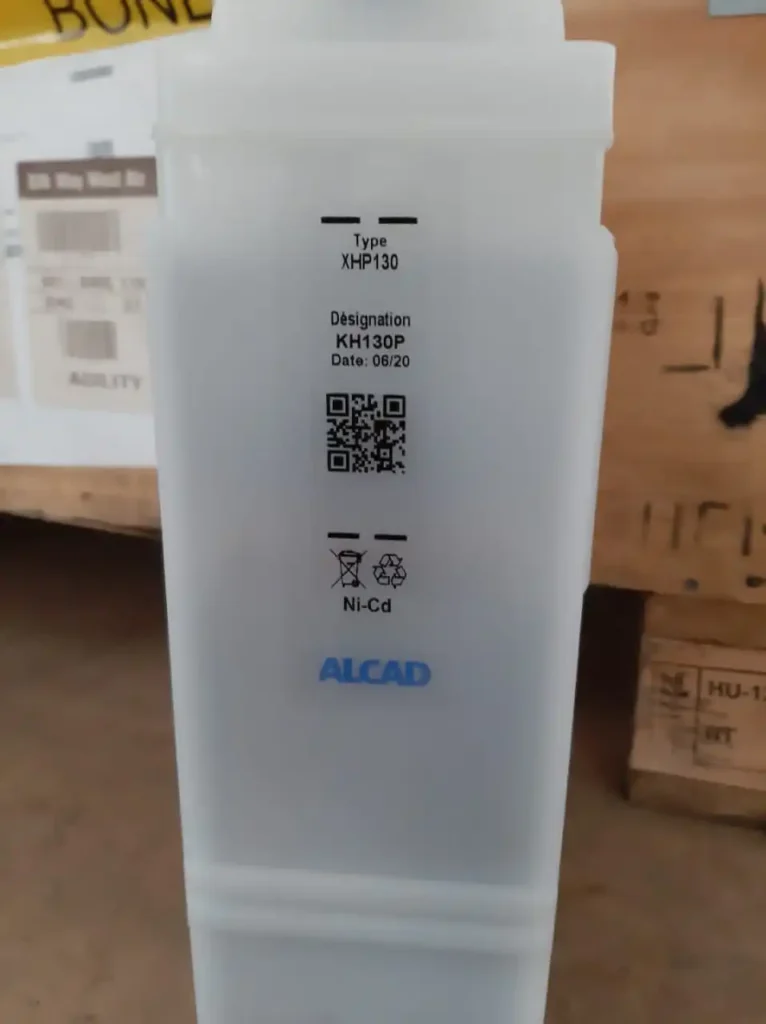
US utilities and EPC contractors normally meet the brand under specific product families:
- Vantex – a low‑maintenance flooded range popular for substation battery backup, control and protection circuits, and SCADA.
- XHP – high‑performance starting batteries for generator starting NiCd battery duties and fast discharge loads.
- LCE and Slim – flexible ranges for UPS, switchgear, and telecom/auxiliary systems where footprint is tight.
You will see these cells built into DC systems for:
- Gas and steam turbine control power.
- Substation switchgear and relay protection.
- Black‑start diesel generators and emergency lube‑oil pumps.
- NiCd battery for UPS feeding DCS, safety PLCs, and communication systems.
When a federal tender talks about a pocket‑plate NiCd flooded cell or mentions 1.2V 80Ah Alcad battery or 1.2V 285Ah Alcad battery, it is usually one of these families.
4. Key advantages vs industrial lead‑acid
If you are a US plant engineer or MRO manager comparing NiCd vs lead acid industrial solutions, the real question is not only price. It is total risk and lifecycle cost.
4.1 Reliability in harsh environments
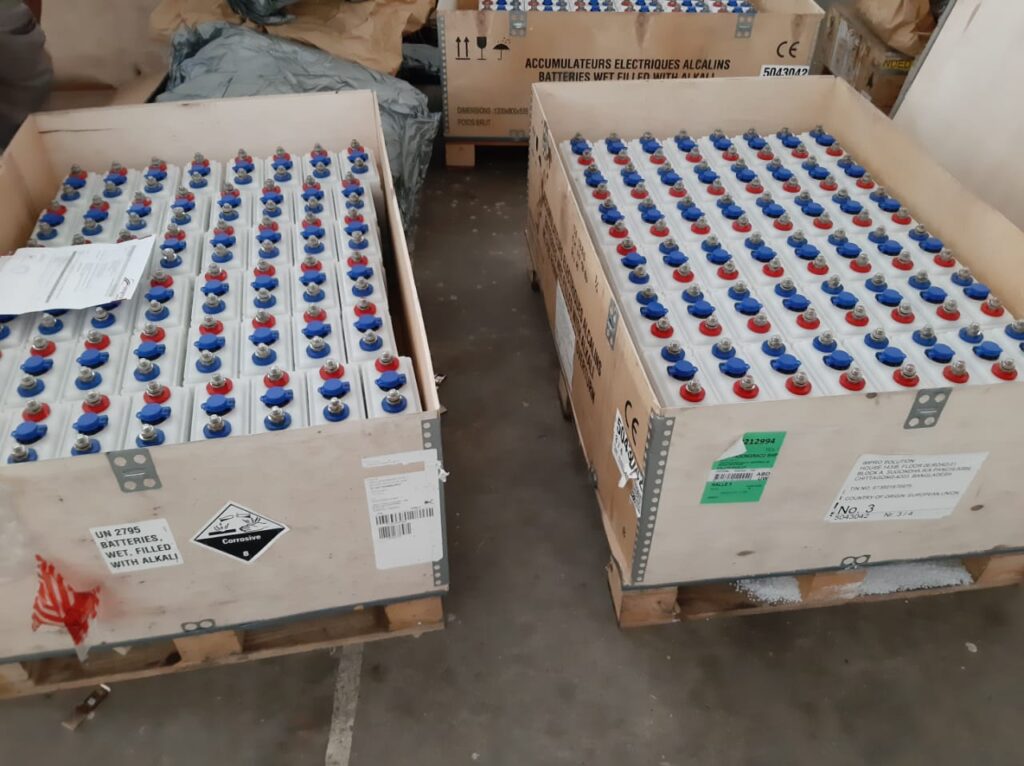
Alcad NiCd cells handle:
- High temperatures without the same rapid capacity loss seen in VRLA lead‑acid.
- Deep discharge and abuse, such as long cranking of emergency diesels.
- Mechanical shocks and vibration found in turbine halls and outdoor yards.
For remote, unmanned sites – pipelines, compressor stations, renewable‑connected substations – this robustness is a major reason to choose industrial NiCd battery supplier over a cheaper VRLA rack.
4.2 Life‑cycle cost and TCO
Capex for an Alcad battery bank is higher than a standard lead‑acid system.
However, when you calculate Alcad battery TCO (Total Cost of Ownership) over 20+ years, the picture changes:
- Fewer full replacements.
- Less emergency call‑out due to sulfation or premature capacity loss.
- Lower risk of nuisance trips, lost megawatt hours, and regulatory penalties.
Long‑term, many utilities find Alcad battery service life cheaper than multiple cycles of lead‑acid change‑outs.
4.3 Safety and environmental stability
NiCd cells are non‑flammable, with tough steel cases and flame‑retardant containers.
They are very resistant to thermal runaway, a key concern for some high‑energy chemistries.
Cadmium is hazardous, but controlled recycling channels exist, and federal contracts typically require proof of compliant disposal.
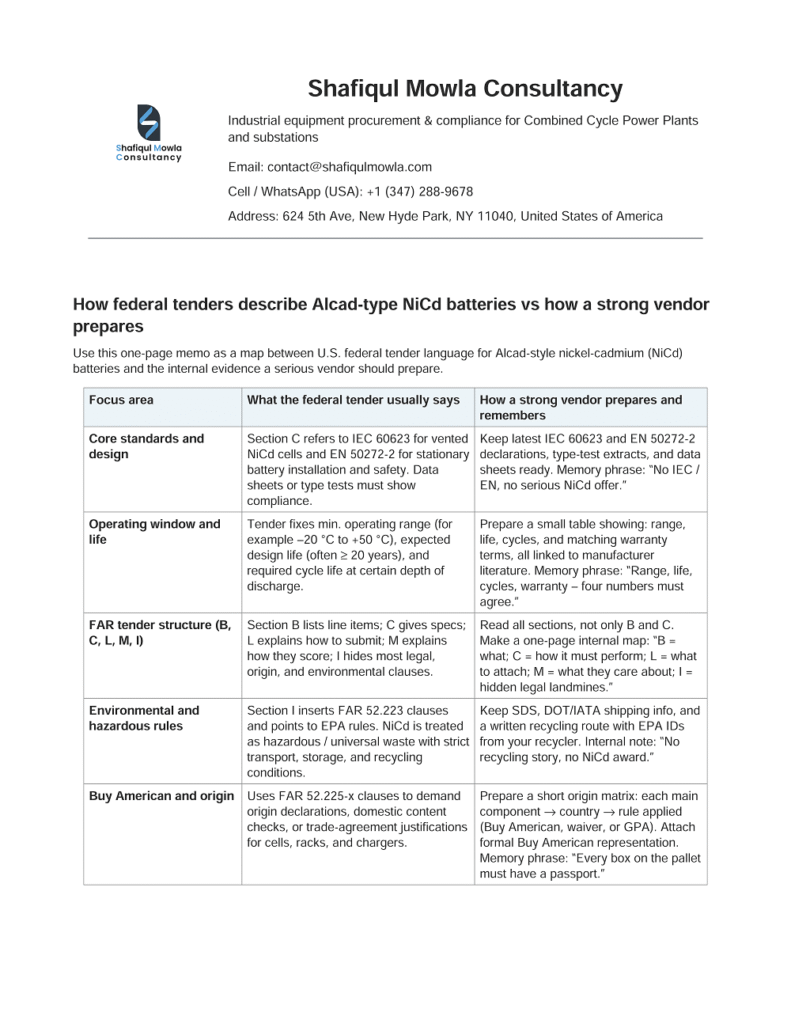
5. Where your US tender language usually hides the NiCd rules
Federal and utility buyers in the USA rarely say “buy from this brand”.
Instead, they specify standards and performance that naturally point toward Alcad NiCd battery or an equivalent pocket‑plate design.
In a typical combined‑cycle or substation tender you will see:
- IEC 60623 – vented NiCd cell design and performance.
- EN 50272‑2 / IEEE battery installation standards – safety distances, ventilation, and protection.
- Requirements for industrial battery harsh environment performance, such as high cycling or extreme temperatures.
- Exact DC bus voltage, duty cycle, autonomy time, and minimum end‑of‑life capacity.
If you can prove that your Alcad battery specifications meet or exceed these points, you are usually on safe ground technically.
6. Documentation federal buyers expect from an Alcad supplier
When you respond to a US federal or utility RFQ, documentation often decides who wins.
Beyond price, evaluators look for suppliers who make the compliance officer’s life easy.
6.1 Technical and quality documents
Be ready to submit:
- Detailed Alcad battery data sheet for each cell type and capacity.
- Type test reports and routine factory test certificates.
- ISO 9001 and environmental certifications for the manufacturing plant.
- NiCd flooded cell battery maintenance manual and installation guide.
6.2 Safety and environmental paperwork
For NiCd chemistry, the buyer will ask for:
- Safety Data Sheets (SDS) covering electrolyte and cadmium.
- Description of your Alcad battery safety measures – ventilation, PPE, spill trays, eye‑wash.
- Recycling or Alcad battery refurbishment options and proof of compliant hazardous‑waste handling in the US.
6.3 Project‑specific compliance
Federal‑funded projects may also require:
- Country‑of‑origin declaration to satisfy Buy American or related rules.
- Evidence that your industrial battery suppliers USA chain is free from restricted entities.
- A clear plan for Alcad battery maintenance, testing, and spare parts over the full contract term.
When this bundle is neat and complete, your bid looks like a low‑risk, high‑control option.
7. How to pick the right Alcad battery distributor in the USA
Many vendors can resell batteries. Fewer can support a power plant for 20+ years.
When you evaluate an Alcad battery reseller USA or Alcad battery distributor, look for:
- Direct technical link to the OEM – access to factory engineering, firmware bulletins, and testing tools.
- Field experience in utilities – real projects in CCPP, substations, or oil & gas, not only telecom racks.
- Own team or partners for Alcad battery installation, capacity testing, refurbishing, and troubleshooting.
- Ability to hold stock of critical spares and cells for fast Alcad battery replacement in emergency outages.
- Capability to package NiCd battery MRO services with training, periodic test plans, and report templates.
In short, choose a partner who helps you run the asset, not just one who ships pallets.
8. RFQ checklist for US plant engineers
Here is a practical list you can adapt into your next specification for Alcad batteries USA or equivalent NiCd solutions:
- Application definition
- DC system voltage, autonomy time, duty cycle, and critical loads.
- Whether it is battery for mission critical applications (black‑start, protection, or safety systems).
- Technology choice
- Pocket‑plate flooded NiCd battery high temperature capable.
- Minimum design life (for example, 20 years at specified temperature profile).
- Target range: Alcad Vantex battery, Alcad XHP battery, Alcad Slim battery, Alcad LCE battery, or equal.
- Performance and testing
- Full duty‑cycle sizing calculations.
- Factory tests, site acceptance tests, and periodic capacity test requirements for Alcad battery testing.
- Acceptance criteria for voltage regulation, recharge time, and Alcad battery voltage regulation limits.
- Installation and maintenance
- Rack layout, room ventilation, and seismic anchoring.
- Detailed plan for watering, visual inspections, torque checks, and NiCd battery low maintenance expectations.
- Required tools and test equipment for Alcad battery troubleshooting.
- Lifecycle and commercial terms
- Warranty period matched to expected Alcad battery service life.
- Options for Alcad battery refurbishment near end of life.
- Long‑term service agreement for Alcad battery maintenance and periodic site visits.
This kind of RFQ immediately signals to the market that you know what you are doing – and filters out weak vendors.
9. Talking to US clients about NiCd in simple language
Many non‑technical stakeholders only see one line item: “battery bank – expensive”.
Your job is to translate NiCd advantages into business outcomes.
When you describe an Alcad battery solution for utilities, focus on points like:
- Grid reliability – fewer nuisance trips and blackouts due to DC failures.
- Regulatory comfort – clear documentation for auditors and safety inspectors.
- Predictable Opex – one long‑life reliable industrial battery instead of repeated emergency replacements.
- Resilience for remote locations – NiCd battery for remote locations where site access is seasonal or difficult.
Once decision‑makers see NiCd not as a commodity but as a risk‑control tool, budget conversations become easier.
10. Final takeaway for US power plant and substation teams
If you operate a US combined‑cycle plant, substation, or oil & gas facility, your DC system is the last place to experiment.
You need a chemistry and a partner that will still be there when today’s turbine has already seen its first major overhaul.
Choosing an Alcad NiCd battery through a capable NiCd battery expert USA gives you:
- Proven technology with decades of field history.
- Strong tolerance for harsh environments and operating mistakes.
- A clear compliance and documentation path for federal or investor‑owned projects.
For your next tender, do not only ask, “What is the lowest price per amp‑hour?”
Ask instead, “Which battery bank will still be protecting this plant 20 years from now – on the coldest night, during the worst storm, when we need it most?”
In many cases, the honest answer is still: a well‑specified Alcad NiCd battery system.