A CBP hold can delay critical industrial shipments unexpectedly.
A U.S. industrial buyer can do everything “right” on the surface—select the correct part number, issue a valid purchase order, and work with a supplier that ships on time—yet still face shipment delays at the port. This disconnect is one of the most misunderstood realities in global trade. The root cause is simple but often overlooked: U.S. Customs and Border Protection (CBP) and partner agencies do not evaluate shipments based on commercial intent or urgency. They assess shipments based on data accuracy, document consistency, regulatory alignment, and embedded risk signals.
This means a shipment is only as strong as the information attached to it. Even when the physical goods are correct, weak or inconsistent documentation can trigger holds, exams, or even suspended releases. From CBP’s perspective, risk is not about how urgent the shipment is to your operations. It is about whether the data tells a complete, credible, and compliant story.
In recent industry discussions among customs brokers, there is a clear pattern of frustration around increasing holds and inspections. Many brokers report that shipments are being flagged more frequently even when the supplier, product category, and port of entry have not changed. This suggests a tightening focus on data quality and compliance signals rather than just trade volume or origin risk.
Another commonly discussed issue is the shared risk within consolidated shipments. For example, a single missing Importer Security Filing (ISF) in a container can trigger exams, delays, and additional costs for all shipments inside that container—even those that are fully compliant. This creates a situation where your cargo performance is partially dependent on the compliance behavior of other shippers.
The takeaway is clear: customs readiness must be treated as a pre-shipment discipline. It is not something that can be fixed after cargo has already moved. Once a shipment is in transit, the ability to correct weak documentation becomes limited, slower, and more expensive.
Avoiding a CBP hold requires accurate shipment data.
What In-House Teams Usually Get Wrong
One of the most common operational mistakes is assuming that the customs broker will resolve any issues after the shipment has been dispatched. While brokers play a critical role in processing entries and interfacing with CBP, they are not positioned to repair fundamentally weak shipment data.
A CBP hold can increase storage and demurrage costs.
Brokers work with the information they are given. If the commercial invoice lacks detail, if the product description is vague, or if the origin data is unclear, the broker cannot simply “fill in the gaps” without risking compliance issues. In fact, brokers themselves often highlight how frequently they receive incomplete or unusable documentation from importers and suppliers.
For industrial shipments, this problem becomes more serious. A description that includes only internal part numbers may be sufficient for procurement and engineering teams, but it is not meaningful for customs review. CBP requires clear, plain-language descriptions that explain what the product is, what it does, and in some cases what it is made of. Without that clarity, the shipment becomes harder to classify and more likely to be flagged.
Brokers cannot always prevent a CBP hold after shipment.
Inconsistencies across documents are another major trigger. If the commercial invoice lists one seller, the packing list shows another, and the certificate of origin suggests a different country, the shipment immediately raises questions. These are not minor clerical issues—they are signals of potential non-compliance.
A CBP hold may occur despite correct part numbers.
Timing also plays a role. Late documents, last-minute changes, or missing data elements increase the likelihood of errors. When shipments are rushed without proper document alignment, the risk of a hold rises significantly. The result is not just delay, but additional costs such as storage, demurrage, and examination fees.
Reducing CBP hold risk starts before cargo dispatch.
Why the Buyer Must Own Document Readiness
CBP guidance consistently reinforces one key principle: the importer of record is ultimately responsible for the accuracy and completeness of the shipment data. This responsibility does not transfer to the customs broker. Even when a broker is involved, the legal and operational accountability remains with the buyer.
A CBP hold can disrupt supply chain timelines significantly.
For industrial importers, this means taking an active role in verifying that all shipment documents are aligned before dispatch. It is not enough to assume that the supplier has prepared everything correctly. A structured, buyer-side review process is essential.
This review should treat the shipment file as a connected system rather than a set of individual documents. The commercial invoice, packing list, and any supporting certificates must tell the same story. Product descriptions should be clear and consistent across all documents. The declared value should align with the purchase order and payment terms. The country of origin must be logical and supported by the supply chain path.
Incomplete invoices frequently trigger a CBP hold.
Special attention is required for complex shipments. Orders that are split across multiple shipments, drop-shipped from third parties, consolidated with other cargo, or routed through intermediary countries carry higher risk. Each additional step in the supply chain introduces the potential for data inconsistency or loss of traceability.
A strong pre-shipment review should include:
Clear, plain-English product descriptions
Correct and consistent party details (seller, buyer, consignee)
Logical and supportable declared values
Accurate country of origin information
Alignment of quantities and packaging details
Verification of any agency-specific requirements
It should also include a check for upstream risks. For example, if the shipment is part of a consolidated container, the buyer should confirm that all required filings—such as ISF—have been properly completed. Ignoring these upstream factors can result in delays that are outside the buyer’s immediate control but still impact their cargo.
A CBP hold affects both cost and delivery reliability.
CBP hold – The Cost of Weak Documentation in Industrial Supply Chains
The financial and operational impact of weak documentation goes beyond simple delays. In industrial environments, where equipment uptime is critical, a delayed shipment can disrupt maintenance schedules, halt production, or delay project timelines.
Storage and demurrage charges can accumulate quickly when cargo is held at the port. Examination fees add another layer of cost, often without warning. More importantly, repeated compliance issues can affect an importer’s credibility with customs authorities, potentially leading to increased scrutiny on future shipments.
Proper compliance checks help avoid a CBP hold.
There is also a reputational impact within the supply chain. Suppliers, logistics providers, and internal stakeholders may lose confidence in the buyer’s ability to manage imports effectively. Over time, this can lead to higher costs, reduced flexibility, and strained business relationships.
How Your Service Becomes Valuable
This challenge creates a clear opportunity to position your service as a practical and necessary solution. The value you offer is not in replacing the customs broker, but in strengthening the shipment file before it reaches the broker.
A CBP hold can impact importer credibility with authorities.
Your role is to act as a pre-shipment checkpoint—reviewing the data, documents, and supply chain logic to identify issues that could trigger delays. This proactive approach helps reduce preventable risks and ensures that the broker receives a clean, consistent, and well-prepared file.
For U.S. industrial buyers, especially small and mid-sized firms, this is highly relevant. Many of these companies do not have a dedicated trade compliance team. Instead, responsibilities are spread across purchasing, logistics, and finance functions. While these teams are capable, they may not have the specialized experience needed to identify subtle risk signals in shipment documentation.
Your experience becomes the differentiator. With years of exposure to real-world supply chain patterns, you can recognize when a shipment “looks right” versus when it truly meets compliance expectations. This kind of pattern recognition is difficult to replicate without hands-on experience.
Many delays originate from preventable CBP hold issues.
CBP hold – Turning a Pain Point into a Competitive Advantage
What makes this service commercially strong is that it addresses a problem most buyers already feel but cannot easily solve. Shipment delays, unexpected costs, and compliance uncertainty are common frustrations. By offering a structured pre-shipment review, you turn these pain points into a manageable process.
A CBP hold highlights weaknesses in shipment documentation.
Instead of reacting to problems after they occur, buyers can prevent them before the cargo moves. This shift from reactive to proactive management improves reliability, reduces costs, and builds confidence across the supply chain.
In a market where timing, cost control, and operational continuity are critical, reducing avoidable customs risk is not just a compliance function—it is a competitive advantage.
FAQ
What causes a CBP hold on industrial cargo?
A CBP hold can be triggered by document inconsistency, missing or weak data, origin concerns, agency review, ISF issues, or other risk factors tied to the shipment and its paperwork.
Can a good PO still end in a customs delay?
Yes. A purchase order shows commercial intent, but customs looks at shipment data, descriptions, origin, value, and compliance details.
Does the broker carry the full responsibility for CBP hold?
No. The importer of record remains responsible for the correctness of the entry package even when a broker files the entry.
What can be checked before shipment to reduce hold risk?
Review invoice description quality, origin, valuation support, consignee and seller details, quantity consistency, and any filing or agency requirements tied to the item.
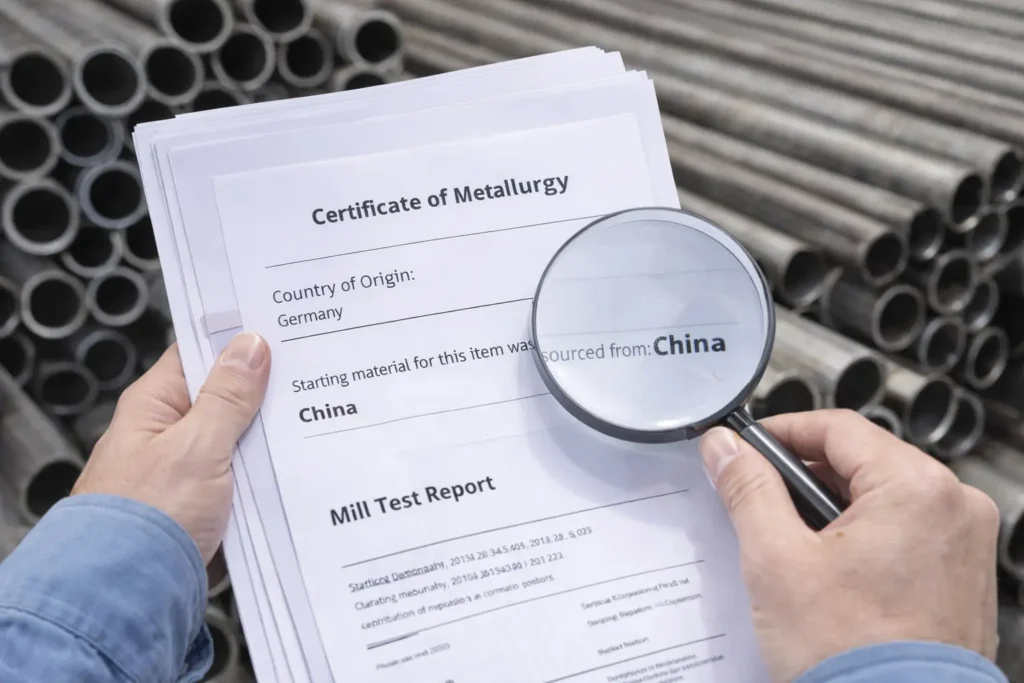
When a relief-valve body cracks or a high-pressure header fails, nobody blames the logo on the nameplate. Investigators ask a harsher question: “What was this metal really made of, and can we prove it?” This question lives at the level of chemical composition, heat number and EN 10204 certification—what I call the DNA of compliance.
As a solo compliance consultant serving U.S. combined-cycle power plants and substations, I treat every component like a forensic case. Brand reputation and catalog data are not enough. If the mill test report (MTR) and heat-number trail are weak, the risk is already inside your plant. This article explains how to read the DNA of metal compliance, why EN 10204 certificates matter so much and where to look for hidden risks in twenty real items used in combined-cycle power plants.
What the DNA of metal compliance means
In metallurgy, the true identity of a material is defined by four pillars:
Chemical composition—exact percentages of carbon, chromium, nickel, molybdenum and other alloying elements.
Mechanical properties—yield strength, tensile strength and impact values.
Heat number—a unique identifier linking the piece to a specific melt at the steel mill.
Inspection document—an EN 10204 inspection certificate and an MTR that verifies test results.
Together these elements form the material’s DNA. Without them, your plant has no verifiable record of what a component actually is.
Heat numbers: the passport of your metal
A heat number is stamped on the plate, forging or bar and acts like a passport; it links the product back to a specific furnace batch in the mill. Through this number you can pull complete chemical and mechanical data, production date and furnace information. If the heat number on a component and the heat number on the MTR don’t match, your traceability is broken.
EN 10204 certificate types
EN 10204 defines four types of inspection documents for metallic products. A 2.1 declaration only states that the material complies with the order. A 2.2 test report contains non-specific test data. A 3.1 inspection certificate includes specific tests on the supplied batch and is signed by a QA representative independent of production. A 3.2 certificate includes all the 3.1 requirements plus verification by a third-party inspector or the purchaser’s representative. For critical pressure parts, 3.1 should be your baseline; for high-risk or regulated equipment, 3.2 is advisable.
Mill test reports
A mill test report (MTR)—also called a mill test certificate (MTC)—is the document that accompanies a heat number. It records the material’s grade, chemical composition, mechanical properties, heat number, production date and compliance with standards such as ASME, ASTM and EN. Treat an MTR like court evidence; if it is missing, incomplete or falsified, you have no proof that the material meets your specification.
Why this matters in combined-cycle plants
Modern combined-cycle gas-turbine plants and high-energy substations subject metal components to extreme conditions: high pressure, high temperature, cyclic loading and corrosive or erosive media. A single mismatch—for example, low chromium content in a high-temperature header—can shorten life, accelerate creep or cause premature cracking. When regulators, insurers or OEM warranty teams investigate a failure, they don’t care about the vendor’s brand; they ask whether the heat number, MTR and EN certificate prove the material is correct.
Most U.S. owners and EPC contractors trust reputed OEMs and expect compliance by default. In reality, counterfeit or mis-labelled parts can slip into the supply chain at stockists, fabricators or package suppliers. Only through rigorous document review and random spot checks can you ensure that the heat number on the delivered item matches the MTR and that the MTR corresponds to the 3.1 or 3.2 certificate.
Twenty high-risk items in a CCPP
Below are twenty real components in a combined-cycle power plant and its electrical balance of plant where chemical composition and traceable certification directly impact safety and life. For each item, using an EN 10204 3.1/3.2 certificate and verifying the heat-number chain is critical:
Main high-pressure steam piping from the heat-recovery steam generator (HRSG) to the steam turbine.
High-pressure and intermediate-pressure HRSG headers.
Superheater and reheater tubes in the HRSG.
Steam-turbine rotor forgings.
Steam-turbine inner and outer casings.
Main steam stop and control valves (bodies, bonnets, discs).
Safety and pressure-relief valve bodies for the HRSG drums and boiler circuits.
High-pressure feed-water piping (economizer to drum, boiler feed lines).
Boiler or HRSG drums and nozzles.
Main condenser shell nozzles and plates.
Gas-turbine exhaust diffuser and transition ducts.
Critical flanges (ASME B16.5/B16.47) in steam and feed-water routes.
Weld-neck flanges for high-pressure circuits.
Hanger rods and support shoes for high-temperature piping.
Anchor bolts and baseplates for turbine, generator and HRSG supports.
High-pressure bypass valve bodies and attemperator bodies.
High-pressure/low-pressure heater shells and tube sheets.
Substation busbar support steel and connection hardware.
Live current-carrying parts in high-voltage disconnect switches.
Pressure-retaining manifold blocks in lubrication and hydraulic systems.
For each of these, a shallow 2.2 test report is not enough. If you rely on generic declarations rather than 3.1/3.2 certificates and heat-number traceability, you are accepting a silent risk in your plant.
Why materials fail compliance audits
From my experience reviewing MTRs and EN certificates, most non-conformance issues fall into a few categories. The table below summarizes common root causes of material non-compliance observed in power and heavy-industry QA reviews:
Root cause
Share (%)
Wrong or incomplete EN 10204 type
25
Heat number mismatch or lost traceability
20
Chemistry outside specified limits
18
Mechanical properties below required values
15
Missing or incorrect test standards on MTR
10
Welds not covered by relevant MTRs
7
Administrative/document handling errors
5
These figures illustrate why I emphasise “DNA of compliance”: most failures are invisible at the catalog level but obvious when you read the certificate and test data carefully.
Example flow of forged documentation
Counterfeit certificates can enter the supply chain through multiple steps:
A mill produces genuine 3.1-certified material and sends a valid MTR.
A stockist copies the document and mixes different heats or re-stamps bars, breaking traceability.
A fabricator cuts or welds components but fails to maintain markings, creating untraceable pieces.
A package supplier bundles parts under a reputable brand, relying on the buyer’s trust.
Without independent checks, the buyer receives a finished component with no verifiable link between the stamped heat number and the original MTR.
How an independent consultant protects owners and EPCs
As a compliance consultant, I see my role as reading the documents nobody else has time to read. I work at three stages:
Before the purchase order – translating line lists and P&IDs into material requirements, specifying which components need EN 10204 3.1/3.2 certification and heat-number traceability, and writing clear compliance clauses in RFQs and POs.
During vendor evaluation – verifying that heat numbers on samples match the MTRs, checking chemical and mechanical data against ASME and EN requirements, and flagging suspicious copy-and-paste certificates.
At incoming inspection – preparing simple checklists so that site teams can confirm heat numbers and certificate types quickly. If documentation is missing or inconsistent, I raise it before installation.
Turning your RFQ into a compliance filter
Rather than trusting brand names, add specific demands to your RFQ:
Require EN 10204 3.1/3.2 certificates for high-energy components.
Mandate heat-number traceability from the mill to the final part.
State that MTRs must list chemistry, mechanical properties and test standards; generic declarations are unacceptable.
Reserve the right to witness mill tests or appoint a third-party inspector for critical items.
By setting these rules at the bidding stage, you ensure that suppliers price in quality and transparency rather than cutting corners.
Conclusion and call to action
Combined-cycle plants depend on silent assumptions about the material integrity of their piping, valves, casings and supports. If the EN 10204 certificate is incomplete, the heat number is mismatched or the chemistry is off-spec, your plant may still operate for now, but you are building in future failure.
If you run or build combined-cycle power plants or substations in the U.S., don’t rely on brand names alone. Insist on the DNA of compliance: EN 10204 3.1/3.2 certificates, MTRs with full chemistry and mechanical properties, and heat-number traceability. If you don’t have time to read these documents yourself, that’s where I come in.
Send me your next RFQ package or a batch of MTRs. I’ll show you—line by line—where your metal DNA is strong and where hidden risks are quietly sitting in your documentation. Together we can protect your plant from hidden failures and audits.
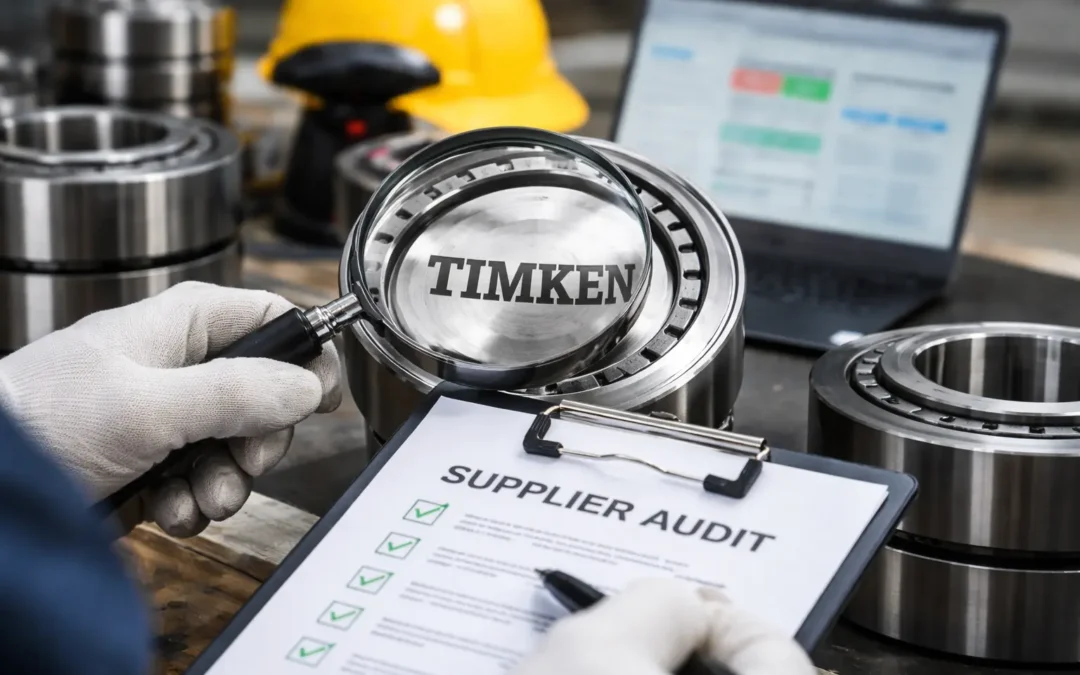
Counterfeit bearings can cause serious damage to industrial machinery.
U.S. industrial buyers still lose money on branded parts that look genuine on paper but are weak in source path. The problem is not only fake product. It is fake confidence. A quotation looks polished. A box looks clean.
A certificate looks presentable. Then the part arrives, runs hot, fails early, or creates an argument about whether it was ever bought through an authorized channel.
Proper documentation helps reduce the risk of counterfeit bearings in shipments.
Many companies lose money each year due to counterfeit bearings entering their supply chain.
Timken states that fake bearings can look original, packaging can be an exact copy, and the result can be unplanned downtime and expensive repairs. That matters for power plants, processing facilities, and distributors that buy under pressure.
Reddit discussions around counterfeit network gear show the same market pattern: even experienced teams say fake product can look real until someone checks a deeper technical detail or the product simply fails in service.
Counterfeit bearings remain a persistent and costly problem for industrial buyers across global supply chains. At first glance, many counterfeit bearings appear identical to genuine products. The packaging looks professional, labels seem correct, and documentation often appears complete. However, the real issue begins once these counterfeit bearings are installed in critical machinery, where performance failures quickly expose their poor quality.
Counterfeit Bearings – What in house teams often miss
It is important to verify suppliers to avoid purchasing counterfeit bearings.
Many internal teams are split by function. Purchasing checks price and lead time. Engineering checks part number. Stores checks delivery. Finance checks invoice. But nobody verifies the full chain between brand name and actual supply route. That is where counterfeit and suspect material survives.
One of the biggest risks associated with counterfeit bearings is unplanned downtime. In industries such as power generation, manufacturing, and processing, even a short disruption can lead to significant financial losses. Counterfeit bearings tend to run hotter, wear out faster, and fail under normal operating conditions. These failures not only damage equipment but also increase maintenance costs and reduce overall operational efficiency.
Authorized supplier pathway review
Counterfeit bearings often look identical to genuine products but fail much faster.
Common blind spots are simple. The seller is not in the normal distributor pathway. The quotation language is generic. Serials are present but not tied to manufacturer validation.
Packaging looks right but the paperwork does not explain how the item moved from OEM to seller. The exporter cannot show a clean trail for batch, packing, or source. In urgent shutdown buying, these checks are often skipped because everyone wants the part moving today, not the problem showing up next month.
The challenge for many procurement teams is that counterfeit bearings are not always easy to detect during the purchasing stage. Suppliers may provide polished quotations, convincing certificates, and seemingly valid serial numbers. Without proper verification, these details can create a false sense of confidence. Many buyers assume that if the paperwork looks correct, the product must be genuine. Unfortunately, counterfeit bearings exploit exactly this assumption.
Counterfeit bearings can negatively impact operational efficiency.
Cinematic industrial compliance video
What U.S. buyers should check before issuing the final go ahead
Using counterfeit bearings can lead to unexpected equipment downtime.
For bearings and other rotating spares, the most practical buyer side review starts with source legitimacy, not only product appearance. Ask whether the seller is the OEM, an authorized distributor, or a secondary trader. Ask for the channel explanation in writing.
Ultimately, avoiding counterfeit bearings requires a proactive and structured approach. It is not enough to rely on appearance or documentation alone. Buyers must develop a habit of questioning the source, validating the supply chain, and ensuring full transparency before approving any purchase. By doing so, companies can protect their operations, reduce downtime, and maintain the reliability of their equipment.
Match manufacturer name, part number format, country of origin, date code logic, and packaging signals. Ask whether the seller can provide traceable batch or carton level evidence instead of only marketing brochures.
Engineers must be trained to identify signs of counterfeit bearings.
A key issue lies in the lack of end-to-end supply chain verification. In many organizations, responsibilities are divided across departments. Purchasing focuses on cost and delivery timelines, engineering checks part numbers, and finance reviews invoices. However, no single team may take full responsibility for verifying the authenticity of the supply route. This gap allows counterfeit bearings to enter the system unnoticed.
Then review the document package as one connected system. Commercial invoice, packing list, certificate language, and labels should not conflict with one another.
Counterfeit bearings pose both financial and safety risks to businesses.
If the exporter says the goods are genuine and factory fresh, the paperwork should support that statement without vague wording. If the route is indirect, the buyer needs to know why. If there is repacking, relabeling, or mixed consolidation, the risk goes up.
Counterfeit bearings may not meet required safety and performance standards.
Counterfeit bearing risk inspection scene
Where your service fits
Procurement teams should implement strict quality checks to detect counterfeit bearings.
This is a strong service line for your website because it is not ordinary sourcing. It is risk reduction before cargo moves. You are not promising that every shipment is perfect.
Many industries are raising awareness about the dangers of counterfeit bearings.
To reduce risk, buyers must shift their focus from product appearance to source validation. It is essential to confirm whether the supplier is an original equipment manufacturer (OEM), an authorized distributor, or a secondary trader. Requesting a clear explanation of the supply chain path can reveal inconsistencies that might otherwise go unnoticed. Genuine suppliers should be able to provide traceable documentation, including batch numbers, origin details, and verifiable certification.
You are showing buyers that you review the things many teams assume someone else already checked: source path, document consistency, origin logic, traceability language, and warning signs that do not look serious until they become a claim or receiving rejection.
Realistic procurement video
Counterfeit bearings are commonly found in global spare parts markets.
Your 19 years of supply experience is valuable here because this work depends on pattern recognition.
Choosing authorized distributors is one way to avoid counterfeit bearings.
Another important step is reviewing all documents as a connected set rather than in isolation. The commercial invoice, packing list, and certificates should align in terms of product description, origin, and manufacturer details. Any mismatch or vague language can be a warning sign of counterfeit bearings. Additionally, buyers should be cautious when dealing with repackaged or consolidated shipments, as these increase the risk of product substitution.
A new buyer may see a good price. An experienced reviewer sees whether the offer behaves like a real industrial channel or a copied commercial front.
Training internal teams to recognize the warning signs of counterfeit bearings can also make a significant difference. Simple checks, such as verifying distributor authorization, comparing product markings, and confirming serial numbers with manufacturers, can prevent costly mistakes. In urgent situations, where speed is prioritized, these checks are often skipped, increasing exposure to risk.
Installing counterfeit bearings can increase maintenance costs significantly.
FAQ
How can a buyer tell if bearings are counterfeit?
A buyer should not rely on packaging alone. Review the source pathway, ask whether the seller is authorized, compare part and batch logic, and check whether the document pack supports a genuine OEM or authorized distribution route.
Can counterfeit bearings still look genuine?
Yes. Manufacturer guidance warns that fake bearings can look original and packaging can be copied. That is why document review and source legitimacy checks matter before shipment.
Why is source path more important than price?
A low price does not prove fraud, but an unclear source path raises risk. In industrial MRO, a cheap branded part can become expensive if it causes downtime, early failure, or warranty disputes.
What should be reviewed before shipment?
Review quotation wording, commercial invoice, packing list, source explanation, origin details, traceability language, and any authenticity or test documents connected to the part.
If your purchasing team assumes every metal-heavy import will be charged twice, your landed-cost sheet may be overstated.
Section 232 non-stacking 2026 rules clarify when multiple U.S. import duties cannot be applied to the same product shipment.
If your team assumes the opposite, your budget may be short and your broker may have to explain a painful correction after entry.
That is why the 2026 non-stacking rule matters.
On February 20, 2026, the White House issued a temporary 10 percent import surcharge under section 122 of the Trade Act, effective for goods entered on or after 12:01 a.m. eastern standard time on February 24, 2026, unless suspended, modified, or ended earlier.
But the same proclamation also says the surcharge does not apply in addition to tariffs imposed under section 232.
In plain English, this means the rule is not “everything stacks on everything.”
It is more technical.
Importers must understand section 232 non-stacking 2026 to avoid unexpected tariff costs at customs clearance.
If section 232 applies to the full import line, the 10 percent surcharge should not pile on top of that section 232-covered portion.
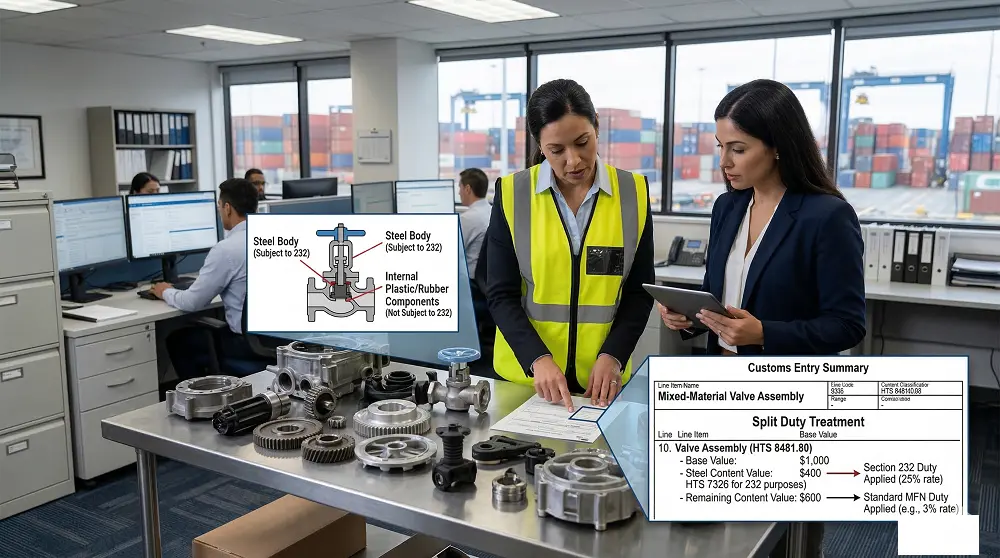
If section 232 applies only to part of the import, the 10 percent surcharge may still apply to the part that is outside the section 232 coverage.
For industrial buyers, EPC teams, OEM-part importers, and MRO procurement staff, this is not a small paperwork issue.
It affects budget approvals, customer quotes, bid assumptions, recovery conversations with brokers, and whether a shipment looks clean or confused at entry stage.
The policy behind section 232 non-stacking 2026 prevents certain tariffs from being charged on top of each other.
FTZ privileged foreign status review for industrial imports in 2026
What Changed in 2026
The February 20, 2026 proclamation imposed a temporary 10 percent ad valorem duty on imported articles, subject to listed exceptions.
Many industrial buyers are reviewing contracts because of the section 232 non-stacking 2026 guidance.
The effective date was set for entries made on or after February 24, 2026, and the stated period runs through July 24, 2026 unless changed earlier or extended by Congress.
The same proclamation also built in an important exception structure.
One carve-out matters immediately for industrial import planning. Articles and parts of articles that are currently subject, or later become subject, to section 232 additional import restrictions are excluded from the surcharge.
A serious U.S. procurement office shows a buyer reviewing an industrial import file.
What Section 232 Already Covers
Section 232 is not one single flat rule for all manufactured goods.
Procurement teams should study section 232 non-stacking 2026 before approving overseas steel or aluminum purchases.
It is a framework used by presidential actions to adjust imports when they are found to threaten U.S. national security.
In practical customs work, buyers usually encounter section 232 most often with steel articles, aluminum articles, and certain derivative products.
The White House steel and aluminum action from June 2025 states that previous section 232 tariffs on steel and aluminum articles and derivative articles were increased to 50 percent effective June 4, 2025, with some different treatment for the United Kingdom.
One major goal of section 232 non-stacking 2026 is to simplify how overlapping tariffs are applied.
That same action also made a second point that matters here. For certain products, the additional duties apply only to the steel content or only to the aluminum content, while the non-steel or non-aluminum portion may still face other applicable tariffs.
Pre-shipment duty review checklist for industrial importers in 2026
How the Non-Stacking Rule Works in Plain English
The cleanest way to understand the rule is to break it into three situations.
U.S. import brokers are advising clients to check invoices carefully under section 232 non-stacking 2026.
When section 232 covers the whole line
If the imported article is fully subject to section 232 at the time of entry, the February 2026 surcharge should not be added on top of that section 232-covered line.
This is the easy case. The key is not the invoice description. The key is whether the customs treatment actually places that line under section 232.
With section 232 non-stacking 2026, certain trade measures cannot be combined on the same import entry.
When section 232 covers only part of the line
This is where many teams make mistakes.
The February 2026 proclamation says that if section 232 applies to only part of an import, the 10 percent surcharge applies to the part not covered by section 232 but does not apply to the part that is covered.
In other words, partial non-stacking is possible.
Companies importing industrial components should review supplier documentation due to section 232 non-stacking 2026.
Mixed-material industrial goods and derivative-article situations are where this becomes important.
Section 232 Non-Stacking 2026 – When no section 232 measure applies
If the product is not under section 232 and no other specific exception removes it from the February 2026 surcharge, the 10 percent duty may still apply.
For U.S. industrial importers, understanding section 232 non-stacking 2026 helps reduce tariff uncertainty and compliance risks.
So a buyer cannot assume that having some steel or aluminum somewhere inside a product automatically creates a section 232 shield.
Customs compliance teams are updating procedures to reflect section 232 non-stacking 2026 requirements.
Pre-shipment duty review checklist for industrial importers in 2026
Where Buyers Still Get Tripped Up
First, they confuse physical metal content with legal tariff treatment.
A metal enclosure, bracket, or fabricated assembly is not automatically exempt from the 10 percent surcharge just because it contains steel or aluminum.
Understanding section 232 non-stacking 2026 can help importers estimate landed costs more accurately.
The real question is whether the entry line falls into a section 232 article or derivative treatment and, in some cases, whether only the metal content is subject to section 232 while the rest of the value is not.
Second, teams use the supplier’s commercial description instead of customs logic.
Engineers may describe a part as a skid, frame, cabinet, support, housing, clamp set, or mounting assembly. But the duty result follows classification and applicable chapter 99 rules, not engineering shorthand.
Third, many importers miss the product-group exceptions in the February 2026 proclamation.
Certain energy products, pharmaceuticals, certain electronics, certain vehicles and parts, certain aerospace products, and some USMCA-qualified goods were carved out.
Logistics managers are discussing section 232 non-stacking 2026 when planning shipments to the United States.
Fourth, some buyers forget that timing rules matter.
Goods loaded onto a vessel and already in transit on the final mode before the February 24, 2026 effective time could fall into the in-transit treatment if they were entered before the stated February 28 cutoff.
The FTZ and In-Transit Details Many Teams Miss
The February 2026 proclamation includes two operational points that are easy to miss in rushed planning.
One is the in-transit rule.
Trade advisors often explain section 232 non-stacking 2026 when reviewing tariff exposure with clients.
The proclamation says goods loaded onto a vessel at the port of loading and already in transit on the final mode before the February 24 effective time may be excepted if they were entered before the stated February 28 cutoff.
The other is foreign trade zone treatment.
Goods subject to the surcharge that enter a U.S. FTZ on or after the effective date generally must be admitted in privileged foreign status unless they qualify for domestic status.
That matters because teams sometimes assume an FTZ admission gives them flexibility later.
On a duty-sensitive shipment, that assumption can be wrong if the status rules were not checked before movement.
Documentation accuracy becomes even more important under section 232 non-stacking 2026.
A Pre-Shipment Review Checklist for Industrial Importers
Before a PO is finalized or a shipment leaves origin, a disciplined buyer should check the following:
1) Confirm the correct base HTS classification for the product, not just the supplier description.
2) Check whether the product, or any part of its declared content, falls under a current section 232 steel or aluminum measure.
Industrial spare parts buyers are paying closer attention to section 232 non-stacking 2026 guidance.
3) Review whether the February 2026 surcharge exception list removes the product from the 10 percent duty.
4) Check entry timing and any possible in-transit treatment before using a cost assumption.
5) Flag FTZ treatment early if the shipment may move through a U.S. foreign trade zone.
6) Collect content data needed for customs reporting, including melt and pour or smelt and cast details where applicable.
7) Update landed-cost sheets and bid pricing before the customer sees the quote.
Companies that ignore section 232 non-stacking 2026 may miscalculate import duty obligations.
8) Keep a file of source documents and official references so your team can defend the logic later.
Why This Matters for Bids, Budgets, and Credibility
Duty mistakes do not stay inside the customs file.
Proper classification and origin declarations are essential when applying section 232 non-stacking 2026 rules.
They spread into quoting, margin planning, customer trust, and internal blame.
If a buyer overstates duty, the quote can lose on price. If a buyer understates duty, the job may win and then bleed margin.
Many procurement teams are adding section 232 non-stacking 2026 checks to their pre-shipment review process.
If the team cannot explain why the duty logic changed, the finance side sees confusion and the operations side sees delay.
For U.S. industrial buyers, this is why trade compliance is not just a legal function. It is a commercial-control function.
The cleanest teams treat tariff logic as part of procurement discipline, not as a last-minute broker issue.
Trade compliance professionals see section 232 non-stacking 2026 as a key topic for 2026 import planning.
Section 232 Non-Stacking 2026 – FAQ
Does the 10 percent 2026 surcharge always stack on top of section 232 duties?
No. Since the Section 232 Non-Stacking 2026, the February 20, 2026 proclamation says the surcharge does not apply in addition to section 232. If section 232 applies to only part of an import, the surcharge can still apply to the part not covered by section 232.
If a product contains steel or aluminum, is it automatically treated as section 232?
No. Physical metal content alone does not answer the customs question. The answer depends on classification, chapter 99 treatment, applicable derivative rules, and factual content reporting.
Can a mixed-material industrial item have split treatment?
Yes. Since the Section 232 Non-Stacking 2026, that is exactly why buyers should not use a simple yes-or-no assumption. Some lines may involve section 232 treatment on only the steel or aluminum portion, while other portions remain exposed to other duties.
Do FTZ entries remove the 2026 surcharge issue?
Not automatically. The February 2026 proclamation says goods subject to the surcharge and admitted into a U.S. foreign trade zone on or after the effective date generally must be admitted in privileged foreign status unless they qualify for domestic status.
Is this article legal advice?
No. This article is general informational content for industrial buyers and procurement teams. Final duty treatment should be confirmed with a qualified customs broker or trade counsel using the actual HTS, chapter 99 treatment, and shipment facts.